Showing posts with label sign language interpreter. Show all posts

Wednesday, September 29, 2021

EVENT INTERPRETER SERVICES AND MISMANAGEMENT

 Medical sign language interpreters for communication

Mismanagement in Events neutralizes the whole essence of the event. It depends on various factors such as poor coordination between the team and irresponsible employers working under management. It does not affect the organizers the same way it creates impact and loss of communication for the participants of that event. Some delegates travel abroad to attend the events and are invited as speakers in certain conferences. However, the mismanagement especially in interpretation services makes a huge loss for the exchange of knowledge and information. Languagers have researched thoroughly over event interpreter services and mismanagement. Let’s explore. 

Interpretation services in Conferences: 

Event Interpreter services are always challenging as the amount of work is huge and management is necessary to conduct a successful event. The events that require interpretation services are conferences and business meetings most of the time. However, mismanagement in event interpreter services also happens because of tools used while interpreting. For interpreting conferences, many precautions need to be taken. One of the mismanagements that the organizers do is that they do not offer prep materials to the interpreter. The preparation material is helpful for the interpreter without this interpreter does not have the background knowledge of the topic to interpret. It’s important to interpret effectively.  

Mismanagement in Name Badge: 

Event Interpreter services have numerous mismanagement one of them is mismanagement in name badges. It seems a little challenge but if improper assigning of name badges occurs it leads to serious confusion at the time of the event. The panic creates at that time is unimaginable because of the image of the organizers at stake. Therefore, minor irresponsibility leads to a big problem. Event Management requires running around during the whole event. Event management is all about doing everything proactively. Mismanagement happens due to negligence in small dimensions while planning an event. Especially in business conferences and business meetings where everything needs to be on point there is no room for mistakes during professional business conferences and meetings.  
Event Interpreter services and mismanagement

Unavailability of Interpreter: 

In event management there is the most dangerous factor is the unavailability of the interpreter at the last moment of the conference. Organizers often hire amateur interpreters to save some budget and in the end, it results in major inconvenience at the time of the event. The problem of this solution is to hire an authentic interpreter service provider. Languagers is one of the platforms that offer reliable and professional interpreters. 

Low-Quality Equipment: 

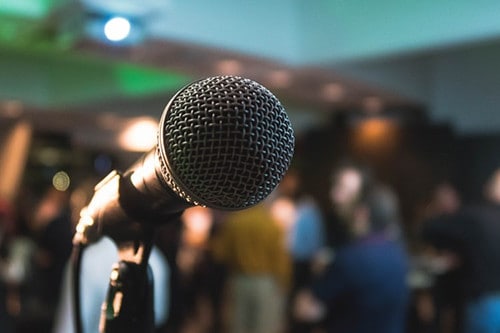
Mismanagement also involves the low-quality equipment used during interpretation. It includes a mic and headphones that break right at the moment of action and the interpreter fails to offer its service.  The solution to this problem is to use high-quality products for big events and conferences. Also, keep spare tools for the bad times. High-Quality products can also break at the time of usage. Therefore, keeping a spare gadget can save you. 

Conclusion: 

Event Interpreter Services needs to be efficient. Interpretation services also include simultaneous interpretation where the task is done simultaneously while the speaker is speaking. However, event interpretation also contains many challenges to face such as last moment drop out of interpreters, cheap tools that stop working, misplacing badges in the event. They all are the circumstances of mismanagement and planning. Therefore, languagers offers event interpreter services that provide reliability when it comes to interprets. It contains well-recruited, professional, qualified, and trustworthy interpreters. The company offers sign language interpreters, medical interpreters, foreign language interpreters, and many other services at reasonable rates. There is no parallel of languagers. What are you thinking of? Check out our portal and get your interpretation done. 

Sunday, September 19, 2021

WHY INTERPRETERS FOR HOSPITALS ARE NECESSARY?


Why-interpreters-for-hospitals-are-necessary


 Interpreters for the hospital are as much important as an interpreter for business meeting and in the education sector. Effective communication is crucial. Therefore, there is nothing that can be attempted without successful communication. In hospitals, there is a need for effective communication between the doctors, patients, and their attendants. The interpreter can cause much ease in medical processing. However, often interpreters are not considered crucial in hospitals but to overcome each hurdle in communication interpreters are necessary. Languagers have studied in detail why  interpreters for hospitals are necessary. 

Comfort: 

The patient medical history and condition are elaborated well by the patient itself. It is of utmost importance to make the patient comfortable in speaking. If a language barrier occurs among the patient and the doctor the gist of proper diagnosis is lost. In that case, an interpreter becomes important for communication. Patients and their attendants are comfortable conveying in their language and they explain more clearly. 

Hospital Image: 

 It is highly appreciated by the patients when hospitals favor them in every way to promote their health. Hiring an interpreter improves the hospital services and earns a good name for it. It omits many risks during the proper diagnosis of the disease. Interpreters at hospitals are experienced in interpreting medical concerns. 

Unbiased Interpreter:  

The interpreter needs to remain unbiased while doing medical interpretation. They work under tough situations where important decisions are to be made for the patient health. If the attendant interprets the medical issues for the patient, it’s difficult to remain neutral during this condition. The interpreter remains neutral and capable to interpret tough decisions to the patient and attendants. 

language-barrier-for-Professional-Medical-Interpreters


Lack of preferred language: 

If the patients are not provided with their preferred language they tend to make wrong decisions for themselves. There are many cases where patients give consent to the hospital for their treatment without knowing the risks and benefits of it. It ends up disappointing when the results come. Professional interpreters tend to avoid this miscommunication. 

Modes of Interpreting: 

With technological advancement mode of interpreting have also advanced. There are three modes of interpretation such as on-site interpreting, video remote interpreting, and over-the-phone interpreting. Medical Interpreters are one click away from patients and it is much convenient for them. 

Interpreters are safe to share: 

There is an element of shyness when communicating with the interpreter. The patient often hesitates to share with an interpreter. Sometimes they have suffered the worst phase and they don’t want to share it with anyone but for proper diagnosis it’s important. In that case, interpreters are safe and reliable to share. 

Sign Language Interpreter: 

People heard of hearing needs a medical interpreter for their proper diagnosis. It’s difficult to handle these patients without the aid of medical interpreters. Some hard of hearing are also experts in lip-reading so they communicate without a sign interpreter. There are also cued speech interpreter that provides cues to the deaf. Along with this emergency, room interpreters play a critical role in overcoming the language barrier. In these situations, professional interpreters are required. Hospital also requires an interpreter for mental patients because expressing mental conditions with language barriers are tricky. There are various benefits of medical interpreters such as patients are satisfied, fewer communication errors, and also the fulfillment of legal requirements. 

Conclusion: 

Medical Interpreter has numerous benefits such as they make comfortable the patients with their reference language, hospital earns a good name, interpreters offer unbiased services and less risk of misdiagnosis. Languagers offer professional medical interpreters and they are recruited after numerous tests and trials. You can trust it and proceed to hire through them. 

Thursday, August 26, 2021

FIVE PROBLEMS FACED BY THE DEAF INTERPRETER

 simultaneous interpretation by Deaf Interpreter


Hearing Impairment imparts psychological issues in the deaf because they are looked down upon as a marginalized part of society. Along with this, the deaf person faces societal judgments and feels left out and incomplete among the group of hearing people. These conditions cause toughness in the deaf personality. Therefore, when they work with the interpreter for a cause there are several challenges to face for the sign language interpreter. We have listed down five problems faced by the deaf interpreter. Many other side problems are going on but the major ones are below. 

1.Physical Fatigue:  

Sign language is the visual language. Body movements, expression, face, and hand movements all are included and work simultaneously during sign language interpretation. In this discourse, the physical health of an interpreter is affected due to the continuous working hours to interpret. Interpreters develop physical disorders in the later stages of their interpreting careers. 

Professional Sign language Interpreter in Conversation

The pain they bear during their working hours is unimaginable. Continuous movements and alertness also affect accuracy. As humans have a limited concentration spans that counts for twenty-five (25) minutes according to research. During conferences and courts sessions interpreters work for hours that affect the interpretation efficiency. 

2. Interpreting in Pairs: 

According to the Registry of Interpreters for the Deaf (RID) almost every interpreter is at the risk of developing injury at some stage in their career that could be a lifetime disability. Hence to overcome the physical challenges for interpreters working in pairs is considered to be the solution. Two interpreters rotate to offer a simultaneous interpretation. The team alternates their duties to relieve the stress of one another but the off-duty interpreter is still on-duty as it is busy helping and checking the accuracy of other interpreters and make suitable changes in time. Hence, if the physical engagement is not involved, mental engagement is still utilizing. 

3. Discrimination: 

There is discrimination made to the official sign interpreter by the deaf community. It is considered that hearing people with sign language skills are culturally insensitive and unable to comprehend the emotional aspect of a conversation with the deaf. The deaf community considers the Children of Deaf Adults (CDA’s) trustworthy of interpreting them as they have grown up with deaf. Therefore, professional sign language interpreter is always discriminated. 

4. Lack of Prep Materials: 

By following the discrimination, interpreters for the deaf get minimum exposure to the deaf client that results in the lack of subject matter of conversation. This develops a hindrance for the deaf interpreter to provide their error-free work because of a lack of preparation notes and guidelines about the conversation. Deaf interpreter is not familiar with the personality of the deaf that leads to misinterpretation often. 

5. Drive for social justice: 

Interpreters term their profession under the category of social justice for the deaf. As they have invisible disabilities and it’s hard to identify hearing impaired. From the 1600s deaf were considered dumb and mentally retard. Many sociologists also claim this such as Aristotle. The deaf were marginalized and treated ill in society. But with time and development organizations for the disabled change the pattern of injustice. Hence interpreters are the medium and voice for non-hearing people. But it’s a challenging task for them to portray the deaf as capable and complete human beings in the community of hearing people. 

Conclusion: 

Problems faced by the deaf interpreter are listed above that count on physical fatigue, working in pairs, discrimination by the deaf community, lack of preparation material, and hectic drive for social justice. After a lot of improvements interpreters still face these problems in their interpreting careers. Languagers is playing an effective role to address interpretation-related problems. Stay tuned for more unique content. 

Wednesday, August 11, 2021

Dos and don'ts in American sign language interpretation

American sign language Interpretation for deaf


American Sign Language Interpretation is a task that needs precision as well as emotional sensitivity towards the deaf person. A sign language interpreter is aware of the emotional turmoil a deaf person experiences in a societal gathering, and the official interpretation requires an emotional connection with the deaf. There are many precautions to take while performing American Sign Language interpretation. It is a task of an interpreter to convey the message effectively as deaf people are insecure about not being able to convey their message to everyone. The interpreter must do such kind of job that the point of the language Interpretation must get across. There is a list of dos and don'ts while attempting sign interpretation. Languagers have thoroughly researched and made some points for their readers. 


Do's:  

Be sensitive: 


Deaf community and their sensitivity are easily navigated when the same situation of not being heard and understood is applied to a normal person existing in the land of foreign languagers. The aggression brings by not being able to communicate, and things would not be executed according to your ways is unimaginable. A sign interpreter must be sensitive when around a deaf person and try to connect with that person so he/she may feel relax and communicate properly through signs. This way an interpreter will also do their task efficiently. 


Fingerspell: 


It is convenient for deaf people to understand the alphabet through fingerspelling. While doing the introduction an interpreter must fingerspell its name first to make a friendly approach towards the deaf. It is good to tell the interpreter's name first in signs of alphabets. The deaf community gives name signs to the people and they expect to be treated in the same way. 


Stable Body Language: 


While doing American Sign Language interpretation, an interpreter's body language is important to develop comfort with the deaf. Stable hand movements and eye contact are crucial to understanding the other expression. Interpreter should get the attention of a deaf person because the purpose of its service is to make the hearing people understand about the deaf. Hearing senses are disabled but its sense of touch is able and the interpreter can tap the arm or the knee of the deaf to make him/her attentive that the interpreter is all set to communicate. Pounding the feet also send vibrations to the deaf.  


Don'ts 


Do not talk fast through signs: 


It's a communication barrier between the deaf and the interpreter if signs are made too fast. The deaf is unable to understand because of the first interaction and also there is a chance of poor cognitive skill so to be on the safe side and make the conversation effective slow signs should be made to get the best outcome. 


Stop Calling names: 


It's highly unethical to label someone by their physical or mental disability. To summon a person his/her name is always called but in cases of disable people, we call them blind, deaf, or dumb. The actions are taken by the authorities and it is suggested to use the word deaf, or visually impaired. These words do not describe their inabilities of senses rather the disability is addressed as natural impairment.  


Interpreter for conversation in American sign Language


Switch Abruptly: 


It is not recommended to change the conversation while talking with the deaf abruptly. It's a rule for the interpreter to make aware the deaf person of the conversation topic and details. Without warning never try to change the topic of the conversation. 


Conclusion: 


There is an extensive list made for the dos and don'ts in American Sign Language Interpretation. The do's list includes being sensitive, always fingerspell your name to make an impression on the deaf, and develop stable body language. The don'ts list includes never change the topic of the conversation suddenly, never make fast signs, and don't be insensitive while calling names to the deaf and other physically challenged people. 

Tuesday, July 27, 2021

IMPORTANCE OF SUBJECT-MATTER DISCOURSE IN SIGN LANGUAGE FOR A DEAF TRANSLATOR

 Subject-Matter Discourse for Deaf translator

1Subject-Matter Discourse for Deaf translator 

Sign language is based on mere gestures, facial expressions, and body language. It’s a discourse of these three elements between a deaf person and a deaf translator. However, this discourse is operative with its constituents that consist of the grammar of sign language. Most importantly Subject-Matter is integrated into the discourse, occurring in the form of a monologue or a dialogue while conversing. The importance of Subject-Matter Discourse in Sign Language for a Deaf translator is significant to comprehend and convey the actual meaning of the conversation. 

2Subject Matter Discourse: 

It’s a gist of the job of a Sign Language Interpreter to understand the subject matter of a conversation. The subject matter is described as the central agenda of a conversation. The background of the agenda is well-known by the translator and he/she has the complete acquisition of the subject matter of the conversation to lead it appropriately. 

Moreover, discourse is termed as the written or verbal communication occurring between a listener and a speaker. So, the Importance of Subject-Matter Discourse in Sign Language for a deaf translator depends on understanding the agenda contributes immensely in producing the flow of effective communication. 

3.  Sign Language as a Second Language: 

Hearing People use sign language to communicate with their deaf parents and relatives. These people are named Children of Deaf Adults (CODAs). But with time hearing people other than CODAs entered into the profession of deaf interpreters and translators due to the establishment of sign language interpreting associations. The birth of this profession was rooted in codes of ethics for sign language interpreters and training programs. Hence sign language started to be learning as a second language to build careers.  

Interpreter for verbal communication

4. Discrimination by the deaf to hearing people: 

Interpreters from non-deaf backgrounds are regarded as outsiders as it is assumed that they have null exposure to the culture and discoursal elements of the deaf community. A conflict is always present between the deaf and deaf translator because of the misconception. Both the parties require the help of each other. Deaf Translators are entirely dependent on the deaf to get their culture and worldview to do the job efficiently.  It’s an integral part of their job to perform well while interpreting. 

5. Understanding of Discourse through training programs: 

With the emergence of the deaf translator as a profession and its popularity in social welfare organizations, several training programs are organized to acquire the language skill in a safe environment with result-oriented outcomes. Consequently, Sign language is gaining professional status. Its demand is increasing day by day hence, it is validating the importance of hearing people learn sign language and remove barriers. 

6. Language and Culture Influence: 

Discourse is dependent on language, culture, and context. In spoken language, the discourse analysis is based on utterance that configures the type and nature of discourse. In Effective Sign Language discourse between a deaf and a translator rely on the context of the situation and culture. It conforms to the discourse structure type that counts on narration, information report, explanation, and exposition. Language and Cultural differences hinder the barrier of communication gap between translator and deaf.    

however, subject matter discourse tends to focus on eye gaze, eye blinks, facial expression, and body movements. An interpreter is aware of the importance of subject matter discourse and language shifts in various contexts.  

Conclusion: 

The acquisition of subject-matter discourse has a complete background of the variations in deaf interpreters from CODAs to hearing people working professionally as sign language interpreters. Several hurdles by the own deaf community were placed for the deaf translators to give birth to this profession. However, with the increased demand sign language programs and training are introduced to get the interpreters fully aware of the subject matter discourse in a conversation. Checkout languagers for more unique content. 

ASL VIDEO INTERPRETATION SERVICES: HOW DO THEY HELP PATIENTS WITH HEARING DISABILITIES?

Although American Sign Language (ASL) interpreters play a crucial role for the people and especially for the whole deaf community but the ad...