Showing posts with label sign language services. Show all posts

Friday, July 9, 2021

SIGN LANGUAGE VS CAPTIONING

 Native languages of video viewers

Many people understand and speak English language but there are a lot of people who would like to start their business in their native language. We are sure if you want your business to reach every corner of the world, you would like to have captioning or sign language services for your clients especially for deaf or hear of hearing ones. Understanding your client’s preferences and working in accordance with it shows the professionalism of any business. Even if you are not expanding your business yet and only going on business trips then how will you jump over that language barrier? It’s easy, you will have captioning or sign language services!  

There’s no denying the fact that Coronavirus pandemic has changed the world of numerous people particularly for the hearing-impaired individuals who face different challenges, literally daily. As the Covid-19 started, higher authorities initiated to hold daily conferences to educate the community through the Internet and television. For this deaf community, people often ask if the need of sign language services is enough or will captioning provide the things which they deserve? We at Languagers, believe that this topic in general initiates a whole new subject and the answer is not straight. So, let’s get this started.  

Need of Sign language Interpretation  

The past conferences during Covid-19 times – encountered several problems at these meetings. In other cases, the interpreters are not accessible in the live feed since the camera settings have been adjusted on the medical officer’s speech with captions on screen. Government officials found a lot of criticism from deaf individuals who did not know what to do to stay healthy and safe (with on screen captions). There has been a trend to reduce expenses and use captioning services but people believe that these are still not perfect in most cases.  


Besides, Sign language Interpretation can provide assistance to your business by helping you prepare for your international marketing plans, signaling different functions, and you can consult hard of hearing people throughout your business meetings. Sign language Interpreters can help you cover the gap that is present between the targeted and the original languages. Sometimes these ASL interpreters even ask questions raising their eyebrows and hence, captioning services do not help to get the final result we want! No one wants such blunders on their globally expanding business or daily routine tasks therefore thinking about captioning services sometimes may seem a little vague! 

Need of Captioning Services  

For the deaf community, captioning services are also needed as the ASL might not be enough to handle things. Captioning informative videos will benefit the deaf people to understand more, have a hold on data, know more vocabulary and they may grasp things faster. However, sometimes, the presence of ASL is not needed depends on the situation for instance there are YouTube channels that cover several COVID-19 topics with captioning services right on point. The way deaf people communicate depends on the extent of their hearing loss and the way things are for them in school. Some people have sign language training while others receive oral education or might learn English as a second language. 

Sign Language vs Captioning 

What technique do you favour the most to visually represent speech on the media platforms for the deaf people? This refers to the fact that post-lingual or pre-lingual deafness approach is there. To ensure that everyone has full access to such videos, we must have both options including Sign Language Interpretation or Captioning Services. Due to the different preferences, backgrounds, and native languages of video viewers, it will be great to offer both English subtitles and ASL services to ensure access. To know more, feel free to contact us at Languagers.  

Monday, March 29, 2021

HOW TO ADD REMOTE ASL INTERPRETERS ON CISCO WEBEX CONFERENCE MEETINGS


Remote-ASL-Interpreters-and-video-conference-01


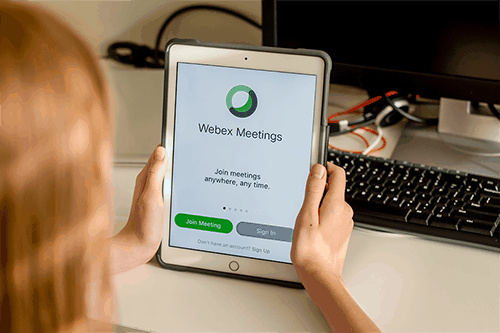
Today - we have been confined to using virtual platforms more often to host our business meetings, keynotes, and office-presentations by the pandemic, making it extra important to find the best methods of hosting the all-inclusive video events. By making it easier and doable for people with hearing impairment to join the video conference from home and becoming the exclusive participants of the event - we also avail the corporate benefits such as refining your brand image and stretching the reach of the videos to the considerably large talents in the ASL community. Numerous video-conference programs allow the best remote ASL interpreters to connect and provide sign language services in real-time to the hard-hearers and similarly challenged individuals. Are you hosting yet another inevitably important business meeting, or delivering a keynote, or just want to avail the web-conference services for future office virtual meet-ups? Learn how to add remote ASL interpreters on Cisco Webex Conference Meetings here.

Cisco Webex Conference Meetings

It is downright convenient and safe to add a remote ASL interpreter on Cisco Webex conference. Compared with conferences and keynotes that take part in huge arenas, auditoriums and incubation centers - this program offers the same thrust of experience but with different options. Here's how we can add the best remote ASL interpreters from our network of language experts on Cisco Webex Conference: 

1) Setup A Meeting or the Video Conference:

Download the Cisco Webex program from the website and set up a personal meeting or video conference event. Share the link with the participants and prepare for an HD video conference backed with a great screen-sharing option which helps move the content in real-time for better understanding.

2) Select the Panelists:

First thing first! The Cisco Webex conference offers a great chance for remote ASL interpreters to be listed as the panelists. It means that they can jump into the discussion, share screen or interact with the viewers without permission or delay.  Don't forget to change the panelist list for both: active speaker and the one using ASL to interpret their message to the crowd of the hearing impaired. That way - we can successfully keep the remote ASL interpreter on Cisco Webex conference.

3) Pin Your Interpreters:

By pinning the remote interpreters - you allow two people to host the video event at once. Therefore, pinning the remote ASL interpreter on Cisco Webex conference is important and worth the technical hassle. By default - this program allows the speaker or anyone in contact with the audience to surface on the screen. But - with ASL interpretation service, we can pin our interpreter and other event moderator to keep 2 people on 1 screen. Even if we change the core speakers - a dedicated ASL interpreter remains a part of the online meeting for the dumb and deaf.

4) Close Captioning for Video Events:

As much as it is easier to add a remote ASL interpreter on Cisco Webex conference - the process of adding the close-captioning service for real time video events is equally convenient. You can enable the close-caption service across all Webex related programs by allowing the best translation service to join your video event and use third-party integration to provide the fastest and the most accurate close captioning services. It means that we have the liberty of hiring the best translation service online and use it as a pathway to adding narrations to our video in real-time.

Looking to set up a quick video conference or online meeting with your business colleagues, friends or your existing workforce? Let Languagers.com take control and make video events all-inclusive for the hard-hearers. Let us host your video conferences with the best remote ASL interpreters available for your Cisco Webex conference. Visit Languagers.com and choose the best translation services in all forms such as written, verbal, phone, video or use our panel of expert sign language interpreters who enable dumb and deaf individuals to become a part of your video events.

Sunday, November 1, 2020

Is American Sign Language Slowly Dying Out?


Deaf community real-time ASL to spoken English

For the past six months, American Sign Language interpreters have become a common sight on American TV screens. This would suggest that sign language is thriving in America. However, some believe that American Sign Language might be on the brink of extinction. 

Is ASL under threat? Here, we’ll attempt to answer this question by looking at a few key facts. 

Why Do Some People Believe that American Sign Language is Under Threat?

At Languagers, we take great pride in providing ASL interpreters to businesses and government agencies all across the United States. We are also a vocal proponent of ASL as a fantastic communication tool for bridging the silence between America’s deaf community and the rest of society. 

Sadly, as passionate as we are about American Sign Language, even we have to admit that ASL might not survive the current century. – At least, not as we know it. 

American Sign Language Could be Superseded by Technology

By far the biggest potential threat to ASL is technology.  

Sign Language interpreters real-time translation

In a recent blog post, we detailed how tech giants like Google are attempting to create real-time ASL to spoken English translation apps.  However, we also colluded that apps likely won’t put ASL translators out of business anytime soon. Sadly, though, we can’t say the same for other forms of technology. 

If they deliver as promised, inventions like Elon Musk’s Neuralink, might well one day make American Sign Language obsolete. After all, who will need to use ASL if people can communicate non-verbally via a brain-to-brain wifi connection? 

One Day This Century We Might Have a Cure for Deafness

Naturally, there are likely millions of deaf and non-hearing impaired American’s who would prefer not to have Elon Musk microchip them if they can help it. However, as well as technological advances in cybernetics, we also need to consider the possibility of major medical breakthroughs. 

In 2019, researchers at Harvard found a potential cure for one of the most common forms of deafness. Specifically, by finding a way to regrow hair cells in the ear that see us experience hearing loss as we age or after exposure to loud noise. 

If scientists can already restore these cells today, it is not unreasonable to suspect that a universal cure for deafness might appear sometime before 2100. 

Can American Sign Language Survive Major Societal Changes?

Putting technology aside for a moment, it is easy to look at the present (where ASL interpreters are more visible than previously), and assume that Amerian Sign Language is healthier than it has ever been. Sadly, though, this isn’t strictly true. 

At present, politicians are making ASL interpreters stars of the Covid-19 pandemic. However, year on year sine 2011, many of the same politicians have scuppered funding for ASL schools and resources in several states. This has resulted in significant stress for many deaf people. 

Will American Sign Language Ever Go Completely Extinct?

At Languagers, we hope that ASL is with us for as long as spoken English is. If you do too, you might, therefore, want to research the history of budget cuts to ASL services in your area. If there is a similar pattern to that in places like Chicago, you might then want to consider helping your local deaf community hold politicians to account post-Covid-19. 


ASL VIDEO INTERPRETATION SERVICES: HOW DO THEY HELP PATIENTS WITH HEARING DISABILITIES?

Although American Sign Language (ASL) interpreters play a crucial role for the people and especially for the whole deaf community but the ad...