Showing posts with label Deaf People. Show all posts

Wednesday, January 27, 2021

How to add remote ASL interpreters on Zoom Conference Meetings


Language-Interpretation-ASL-interpreter-services


Zoom is the preferred video conferencing platform for ASL interpreter services. The software makes it easy for the host to add interpreters to their video conference calls. The host can designate individual guests as interpreters during a Zoom session. This activates an interpretation feature so that participants can see the language associated with each interpreter on the call.  


Deaf participants benefit from the software too. Zoom allows the participants to increase the ASL interpreter video feed size to see the picture more clearly. This comes in handy for deaf people who need to see the ASL interpreter’s hands better as they do their signing.  


Video-Audio-Zoom-Conference-Meetings


When you’re ready to add remote ASL interpreters to your Zoom conference meeting, please follow the five steps below to get started.  


1) Setup the Language Interpretation Session 


There are some prerequisites to adding language interpreters to a Zoom call. You need either a Business, Pro, Enterprise, or Education account, along with the Webinar add-on feature as part of your plan. You’ll also need to download the Zoom mobile app onto your iOS or Android device. If you have Windows or macOS, you can download the Zoom desktop version for it.  


Sign in to your Zoom account and choose “Settings.” Below the “In Meeting (Advanced)” heading, click the digital switch next to “Language Interpretation” to activate it. Some people might not see this feature if they have a different version of Zoom. In that case, contact customer support for assistance.  


2) Add the ASL Language 


Zoom gives you nine languages by default on your language interpretation setup. Click the + sign to add the ASL language. You’ll have to type in the name manually. After it’s added, select the name of the language from the drop-down menu. Click “Add.” Now you should see the language listed amongst the default languages.  


3) Add the Email Address 


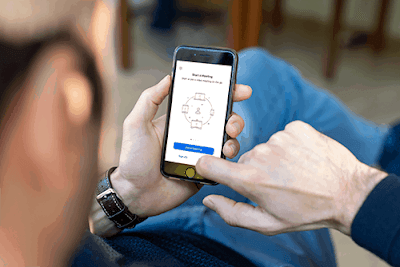
You can add your language service provider’s email address for the ASL language when scheduling the meeting If you have many participants and you have more than one interpreter, you’ll need the ASL interpreters’ email addresses who will participate in your Zoom conference meeting.  It will then generate a separate URL address for each interpreter to use for their scheduled meetup on the Zoom call.  

remote-ASL-interpreters-video-conferencing


4) Add the Interpreters 


Click on “Schedule a Meeting” underneath the Meetings heading. You will see a Meeting ID number. Click on the button “Generate Automatically” that is next to it. Zoom requires you to use this setting for language interpretation calls. Now click on the box next to the words “Enable Language Interpretation.” 


You should see an email address box with a default email address inside it. Next to the box are two drop-down boxes. The first drop-down box states “English” by default. That is the language being interpreted. The second drop-down box is for the interpretation language, which will be ASL in this case. Choose ASL from that drop-down box. 


Now add the email address of the ASL interpreter in the email address box. If you have a second ASL interpreter to add, click the “+ Add Interpreter” to add a new row of boxes to fill out for the next interpreter. Typically, these create separate audio channels for the stream, so you don’t need to see the interpreter’s video. But because this is ASL, you’ll need to have the interpreter’s video activated to see the signing.   


5) End the Meeting 


When you’re done with the interpretation session, go to the meeting controls area and click on “Interpretation.” It will cause the Language Interpretation Window to pop up on the screen. Now click the word “End” to end all the activate video sessions immediately. Choose “Manage Language Interpretation” to modify the interpreter settings as you see fit. Experiment with the controls to make the experience work better for your needs.  

Monday, November 2, 2020

Sign Language Interpreter FAQ’s – Common Questions & Misconceptions

Why does the sign language interpreter you see on television keep making funny faces? Moreover, how do you become an interpreter and how much does an average ASL interpreter earn? 

As a result of Covid-19, ASL interpreters have started to achieve near-celebrity status. However, ASL interpreters becoming so publically visible has left many people with questions about how ASL interpreting works. 

Here, we’ll attempt to answer some of the most common questions about what it means to be a sign language interpreter.  

How Much Does a Sign Language Interpreter Earn?

Is becoming a sign language interpreter a smart career choice? As it stands, the answer is a simple yes.  

At present in the United States, a professional sign language interpreter can earn an average of $44.72 to $49.35 per hour. In many states, this equates to almost double the average hourly wage in other professions. 

Will There Still be Demand for ASL Interpreters After Covid-19?

Contrary to what you might think, being a sign language interpreter involves a lot more than just appearing on daily news broadcasts. Most ASL interpreters don’t even work in the media at all. 

Every day, millions of U.S. businesses rely on ASL interpreters to provide a variety of services to hearing-impaired consumers. All are also legally mandated to do so as per the Americans with Disabilities Act. 

Because sign language interpreters don’t just work in the media, demand for ASL interpreting services won’t disappear after Covid-19. In fact, demand for ASL interpreters is expected to keep on rising until at least 2022. 

Why do ASL Interpreters Always Wear Black?

When you watch sign language interpreters on television, you might notice that many always wear black. This is not always the case. However, when interpreting on television or via a video link, most ASL interpreters will try to wear neutral colors.  

By wearing neutral colors, interpreters can more easily keep viewers’ attention on their facial expressions and hand movements. 

Why do Sign Language Interpreters Move Their Mouth?

Not all deaf people are born deaf. At present, congenital deafness only affects (approximately) 1 in every 1,000 Americans. Because of this many deaf people can lip read. Some ASL interpreters, therefore, mouth words while making hand signs, for the benefit of hearing-impaired people who may not be as familiar with American Sign Language as those who are born deaf. 

Why do Sign Language Interpreters Make Faces?

Contrary to what you might think, American Sign Language isn’t just comprised of different hand signs. As well as hand signs, interpreters can use facial expressions and whole body movements to relate different uses of grammar and emotions. 


Do You Need Professional Qualifications to be a Sign Language Interpreter?

As a rule, you do not need a degree to become an ASL sign language interpreter. Being fluent in ASL will often be enough to allow you to start a potentially lucrative freelance career. However, some employers and translation agencies like ourselves do require a minimal level of experience. 

At Languagers, we hire the best ASL interpreters by requiring all our interpreters to have a minimum of a college education and 3-years of professional interpreting experience. You can find out more about how to become an interpreter with us by clicking here.    


Wednesday, July 8, 2020

American Sign Language (ASL) - Is ASL Universal?

Is-American-Sign-Language-ASL-Universal

What is American sign language? Is ASL a true language? Moreover, is American sign language used universally among deaf people?

Almost everyone has heard of American sign language. However, relatively very few people understand even the basic principles of ASL. Here, we’ll, therefore, look at what everything you need to know about ASL in 2020.

What is American Sign Language?

Is American sign language a true language? — The answer to this question is a simple yes.

Many people assume that when people use ASL, they use their hands to make signs that represent spoken English words and alphabet letters. However, this really isn’t the case.

American sign language is a language in its own right. It is also one that is completely distinct from English. Worldwide, sign language even has different dialects, grammar rules, and what you might think of as accents.

ASL is Over 200-Years Old

Did you know that American sign language is over 200-years old?

As well as not really understanding how ASL works, many people assume that American sign language is a relatively recent invention. You might even think that ASL was developed by linguists at a top university like Harvard. In reality, though, no one is 100% sure of the true origins of ASL.

What we do know, is that ASL we use today has existed for approximately 200-years. We also know that ASL likely came about through the mixing of local sign languages in America, with French sign language (Langue des Signes Française.)

Having strong French influences is part of the reason why ASL is so distinct from spoken and written English. However, it is important to note that ASL and French sign language can not be used interchangeably. Today, ASL is as different from Langue des Signes Française, as French is to English.

Why Do Deaf People Use ASL? 

If you do not have a hearing impairment yourself, you might not understand why deaf people use sign language. After all, wouldn’t it be easier to communicate with others using written English?

As it stands, why American sign language is so important to deaf people is simple.

Research shows that early, natural development of language skills plays a key role in early cognitive development. Language, if you like, isn’t just a tool we use to communicate. As well as this, we all use language to learn about the world and develop both intellectually and socially.

When people are born deaf, learning ASL helps make sure that deaf infants don’t get left behind developmentally. More importantly, learning to sign is also what makes it possible for people to later learn written English.

Is American Sign Language Used Universally?

As already mentioned, ASL has its roots in French sign language. This being the case, American sign language is not used universally.

In the UK and Europe, deaf people do use sign language. However, the sign languages they use are as different from each other as Finish might be to Chinese. Surprisingly, though, ASL is widely used in other areas overseas.

Countries That Use ASL

If you are born deaf in the Philippines, Singapore, or even Jamaica, there is a strong likelihood that you will be taught to use American sign language. In part, this is thanks to historically very strong missionary, aid, and overseas education programs.

Other countries that use ASL include:

  • Barbados
  • Bolivia
  • Canada
  • Cambodia
  • The Central African Republic
  • Chad
  • Hong Kong
  • The Democratic Republic of the Congo
  • Gabon
  • Kenya
  • Madagascar
  • Zimbabwe 

Why Should You Use ASL in Your Business?

At present, American sign language is used by approximately 250,000-500,000 Americans and Canadians. This might seem like a statistically small number. However, just like all consumers, deaf people go where they are treated best by businesses.

If you are a business, you don’t need to hire someone proficient in ASL to be on hand to attend to deaf customers 24/7. However, if you let ASL users know that communicating in ASL is possible using a translator, most will be incredibly appreciative of this. 

How to Hire an ASL Interpreter

At Languagers, we provide ASL interpreters to thousands of businesses all across the United States. Even better, many of our interpreters can work completely remotely. To find out how your business can better support your local deaf community, click here.

English to Sign Language remote translator


ASL VIDEO INTERPRETATION SERVICES: HOW DO THEY HELP PATIENTS WITH HEARING DISABILITIES?

Although American Sign Language (ASL) interpreters play a crucial role for the people and especially for the whole deaf community but the ad...