Friday, July 24, 2020

5 Things to Look for When Working with Phone Interpreter Services

Phone-Interpreter-Services-for-foreign-languages

In the United States, it is estimated that 35 million Americans speak a language other than English as their primary language. With 200+ languages spoken in some city areas, this can make modern customer service somewhat challenging.

As it stands, it is simply not possible to be a business owner and a master linguist who can speak all the languages your customers might come at you with. This is why many businesses now use over-the-phone interpreter services to engage with non-English speaking customers and business partners.


How Do Over-the-Phone Interpreter Services Work?

How over-the-phone interpreter services work is simple. When you know need to communicate in a language you are not fluent in, you simply reach out to a telephone interpreter service like ourselves at Languagers.

Once you tell us what language you need interpreting, we can have a professional interpreter ready to assist you in a matter of seconds. However, this isn’t always true of other agencies. Here, we’ll, therefore, look at five basic things to look for, when working with other over-the-phone interpreter services.


1. Phone Interpreter Services Need to be Available 24/7

24-7-Telephone-Language-Service-Agency

As a basic rule, a reputable telephone interpreter service needs to be available 24/7. You never know when a new customer query, complaint, or request for an urgent telephone meeting might land in your inbox. Neither do customers or business partners appreciate communication delays.

Thankfully, at Languagers, our own interpreters are available 24/7 365-days a year. Whenever you might need us, we’ll be ready.


2. All Calls Must be Kept Strictly Confidential

In business, it goes without saying that anything you discuss with your clients or company partners, needs to be kept strictly confidential. For this reason, it is important to only ever work with agencies like ourselves who rigorously vet interpreters, and make each sign strict confidentiality agreements.


3. The More Languages Agencies Support the Better

When choosing between different over-the-phone interpreter services, it is important to make sure that agencies you work with speak a variety of languages.

Over 200 different languages are spoken in just the New York metro area. If you are in New York, it, therefore, doesn’t make sense to work with agencies that are only capable of interpreting Spanish or Slovakian.

Thankfully, at Languagers, we support 350 different languages. Best of all, we can connect you with a professional interpreter mere seconds after you call us.


4. Look for Localized Language Support

Interpreting telephone calls and customer conversations isn’t just about speaking the same language as your customer or client. In many cases, people you work with will speak precise regional dialects of languages like Italian or Hindi.

To ensure that conversations flow smoothly, it is always advisable to work with interpreters with localized language skills they can match with your customers' or your clients' needs. This isn’t always easy. However, at Languagers, this is something we can help with.


5. Only Work with Telephone Interpreters Who Have a Transparent Fee Schedule

Last but by no means least, never work with over-the-phone interpreter services who can’t tell you upfront how much you can expect to pay.

Some unscrupulous interpreter and translation agencies advertise low fees, but also require their clients to call premium toll numbers that incur excessive extra fees you won’t be aware of until you get your next phone bill. This being the case, always ask about fees and any hidden extra charges, before you start working with any agency.


Thursday, July 23, 2020

Poor English to Spanish Translation Services Cause COVID Chaos in Texas

Translators-needed-to-translate-this-to-Spanish

On Sunday March 22nd this year in Hidalgo County, Texas, Judge Richard F. Cortez announced stay at home orders that would come into force on March 26th.

Like in hundreds of other counties, the purpose of orders was to stem the spread of Covid-19. However, not investing in adequate English to Spanish translation services, saw orders fail to reach many county residents.


Poor English to Spanish Translation Services Left Latinos in the Dark

English-to-Spanish-Translation-Services can help

For the most part, shelter at home orders were heard loud and clear by the majority of English speaking county residents. However, failing to translate orders to Spanish resulted in hundreds of Latinos later being stopped at police checkpoints.

·         In Texas, over a third of residents don’t speak English as their native language.

·         Having a large Hispanic community means that millions of Texans speak Spanish as their first language.

·         As a result of shelter at home orders not being made widely available in Spanish, most people later stopped at police checkpoints were Latinos.

As Black and Latino Americans are more at risk of Covid-19 than other ethnic groups, not being able to access up to date information may have put real lives at risk. However, not translating shelter at home orders to Spanish, was just the tip of a poor communication iceberg in Texas.

Spanish-Translation-Services-needed-in-Texas

Texas Invested in ASL Sign Language Interpreters - But Not Spanish Translators

Saying that State officials in Texas failed to communicate important information to all State residents throughout the March Covid-19 outbreak is an underStatement.

Hiring an American Sign Language interpreter to translate press briefings seemed to suggest officials were on the right track. However, almost no effort was made to cater to the needs of millions of other non-English speaking Texans.

·         During the Coronavirus crisis, no effort was made to translate transcripts of State Governor press briefings to Spanish or other languages.

·         Updates concerning new Covid-19 hotspots were only made available in English.

·         When Texas began allowing State businesses to reopen, guidelines were made available in English only, leaving many Spanish speaking residents unsure how to proceed.


English to Spanish Translation Services are Easily Accessible

Our-translators-translate-English-to-Spanish-Language

It goes without saying that Latinos and other ethnic groups feel let down by how Texas State officials failed to communicate vital information in March this year. However, what makes the situation particularly frustrating, is the fact that English to Spanish translation services are easily accessible all across the State.

At Languagers, we regularly connect businesses and government agencies with Spanish translators and interpreters all across the United States. Best of all, it is possible to work with almost all our translators remotely.


Are You a Texas Community Leader?

Are you a State official or community leader in Texas? If so, now is the time to ensure that history doesn't repeat in the event of a second wave of Covid-19.

Find out just how easy it can be to translate important public announcements quickly and confidentially, by reaching out to one of our support team.


Wednesday, July 22, 2020

Is Demand for Interpreter Services rising or Declining in 2020?

Video-Remote-Interpreter-Services-Trend

Foreign language interpreting and translation is one of the most secure career paths there is in 2020. However, Covid-19 has seen demand for interpreter services in some industries start falling.

In June this year, interpreters in Europe began sounding the alarm over declining work as a result of Covid-19. Here, we’ll, therefore, look at how the language interpreting industry is changing as a result of Covid-19. We’ll also look at how interpreters need to adapt to the current interpreting landscape.


Current Demand for Interpreter Services is Location Dependent

First, let’s address the elephant in the room. Is demand for interpreter services in decline?

At present, many interpreters in Europe are struggling to find work as a result of the Coronavirus crisis. However, while demand for interpreter services in Europe is in decline, this isn’t the case worldwide.

In places like New York and San Francisco, the first two quarters of 2020 saw a sharp rise in demand for interpreters. More importantly, the U.SBureau of Labor Statistics still expects the language services market to grow by 19% between now and 2028.


Why is Demand for Interpreter Services Declining in Europe?

Why demand for interpreter services is declining in Europe at present is simple. The EU has 27 member states. Like here in the U.S., all member states regularly participate in dialogue. However, unlike in the U.S., all dialog is facilitated by teams of hundreds of translators.

l  Almost all 27 EU member states speak different languages. As a result, interpreters are present in all official EU meetings.

l  Political discussions between individual member state representatives are often only possible when an interpreter is present.

l  Overall, official EU institutions are the largest employers of interpreters and translators in Europe.

As a result of Covid-19, most official EU meetings have been canceled this year. Demand for interpreters in Europe has, therefore, declined accordingly. The impact on the interpretation industry in Europe might also be long-lasting. However, worldwide, the outlook for the language and interpreting industry is much more positive.    


Remote Interpreter Services are the New Normal

Telephone-Interpreting-services-for-remote-meetings

Are you a professional interpreter in the EU or elsewhere? If so, the easiest way to counter declining demand for interpreters in your area is to embrace remote interpreting.

Worldwide, providers of on-demand remote interpreter services like ourselves at Languagers, are witnessing an uptick in demand for interpreters as a result of Covid-19. However, Covid-19 isn’t the only factor driving demand for remote interpreting.

l  In October 2019, the United Nations began inviting remote interpretation technology platforms to showcase their capabilities to official members in Geneva. 

l  Even before Covid-19, Video RemoteInterpreting (VRI) was the fastest-growing language service in the United States.

l  According to the National Association of State Courts, 90%of law courts in the U.S. already make use of telephone, radio, and VRI interpreting services.


How Can Interpreters Get Started with VRI and Telephone Interpreting?

Are you an interpreter or translator looking to diversify into telephone interpreting or VRI? If so, the easiest way to start is by working with remote interpretation platforms like ourselves at Languagers.

At Languagers, we spend every day connecting professional interpreters with government agencies, medical authorities, and businesses in a wide variety of industries. This being the case, don’t feel helpless if demand for interpreters is declining in your area. Simply sign up to Languagers to start reaching clients remotely.


Friday, July 17, 2020

How to magnify screens for sign language interpreters during Zoom video conferencing

When you are video conferencing with someone on Zoom who is deaf or hard of hearing, you’ll want to have a sign language interpreter available to translate your spoken words into sign language. Alternatively, if you’re the one who is deaf or hard of hearing, then you may need the sign language interpreter to translate the spoken words of the conference host for you into sign language.

Video conferencing is widely used especially in this pandemic for webinars, online classes, counseling sessions, web conferences, online meetings and virtual events.

Zoom is a convenient video conferencing software that makes online sign language communication possible because each participant can see a separate video feed of the other participants. You will obviously need to see the other people in the conference call if sign language communication is required. The hand interpretation of the sign language interpreter must be clearly visible to the deaf and hard of hearing on the video. Otherwise, it would be difficult to understand them as they sign.

Fortunately, Zoom gives users the option to magnify their screen so that they can see the other person more clearly. If you’re trying to see the signing of someone in Zoom, then you’ll first want to hide the user boxes of the non-video participants. These boxes take up too much space and make the other boxes smaller.


Here is a step-by-step guide on how to magnify screens for sign language interpreters during Zoom video conferencing

1.  Remove unnecessary screens first.  

Hover over any non-video user’s box and click this 3-dot button […]

How to magnify zoom screen for the deaf

Then click Hide Non-Video Participants

How to magnify online zoom screen size

To start this process, click on the 3-dot button in the upper right corner of any non-video participant’s user box. Choose the option that reads “Hide Non-Video Participants.” Now all of the non-video participant boxes should have gone away.

2.  “Side-by-side mode.”

After the host starts screen sharing, participants can hover over the top of the screen, choose the “View Options” tab. On the drop-down menu, select “Side-by-side mode.”  This option is shown to the participants but not shown to the host. 

Screen size options during Zoom conferencing


3.  Drag the divider toward the left.

You might see the user boxes stacked on the right side of the screen. Next to the boxes is a small divider icon that looks like two tiny parallel lines. Click on the divider icon and hold down your mouse button. As you drag the divider toward the left, it will magnify the size of the user boxes. That means you will be able to see the participants more clearly because they will appear bigger on the screen. 

adjusting sign language interpreter screen size


enlarged view of a sign language interpreter


The presentation area is on the left side. If you want to switch to full-screen mode at any point during the video conferencing, double-click on the left side. But if you’re trying to read sign language from a person’s video, then you must make their user boxes as big as possible. By switching to the side-by-side mode and dragging the divider to the left, you can make their user boxes as big as possible.

On a side note, you should invest in a large computer monitor if you conduct Zoom video conferencing regularly. A wide monitor would give you more room to see the video feed of each user box without any hassle. Then you will never struggle to read the sign language on a video conferencing ever again.

If you like to use laptops, then try to find a laptop with a 17-inch screen. It is one of the largest screens you can have for a laptop. Other than that, you could always invest in a video projection device so that you can see a full video projection of the video conferencing on a wall in your home or office. This would be a more extreme thing to do, but it might work wonderfully for anyone with trouble seeing things up close. 

It is very important to have experienced certified interpreters do simultaneous interpreting for your online video conferencing.  Check out Languagers.com to schedule experienced and certified sign language interpreters in your specific industry at affordable prices.  


Tuesday, July 14, 2020

Sign Language Interpreting Services for Live Events


More businesses in the U.S. are investing in sign language interpreting services for conferences and live events than ever previously. The only question is, should you be following suit?

If you are not hearing-impaired, the idea of investing in sign language interpreting services for live events might seem confusing. However, hiring an interpreter for your next event might just be the best idea you’ve had this year.

An ASL Interpreter Makes Events More Inclusive

In the U.S. approximately 15% to 20% of people will experience hearing loss in their lifetime. What this means for your business is simple.

By not investing in sign language interpreting services for conferences, expos, and other events, you potentially exclude a fifth of attendees from fully participating.

Is a fifth of your audience worth you not talking to?

Hopefully, the answer to this question is a simple no. However, hiring an ASL interpreter when organizing a live event, doesn’t just make events more inclusive.


Hiring an ASL Interpreter Makes Events More Memorable

In May this year, people worldwide became familiar with the tragedy that was the death of Minnesotan George Floyd. However, when George Floyd’s funeral aired on ABC Television on June 9th, it wasn’t just Rev. Al Sharpton’s eulogy that got people talking.

When George Floyd’s funeral aired on ABC, millions of people started taking to social media to praise Houston ASL interpreter Gloria Alix.

As well as just interpreting the formalities of George Floyd’s celebration of life, Gloria Alix wowed audiences worldwide, as she interpreted not just several moving speeches, but also several high-energy musical performances.

This message is simple. — It’s not just people with hearing loss who benefit from ASL interpreters being present at events. When you hire the right interpreter. Events can become more memorable for everyone.

Sign Language Interpreting Services for Concerts & Performances

Are you planning a concert, theater production, or another kind of performance? If so, you might think it strange to even consider hiring an ASL interpreter. However, interpreters like Gloria Alix interpreting at events like concerts is altogether common.

Contrary to what you might think, only 1 in every 1,000 Americans are born with congenital deafness. Many deaf people can, therefore, appreciate live entertainment just as much as anyone else.

Attendees might not be able to hear singers belt out electrifying vocals. However, they can appreciate the atmosphere and energy of events. This is especially true when an ASL interpreter is present, who can interpret song titles, vocals, and performer dialogue.

Are You Planning a Conference, or Live Event?

Whatever kind of event you are planning, hiring an ASL interpreter is a must if you want to make your event as inclusive as possible. Doing so is also easier than you might think.

At Languagers, we work with hundreds of highly qualified ASL interpreters who have experience interpreting at conferences, expos, and live music performances. Simply tell us what kind of event you are planning, and we’ll find the right interpreter for you.


Wednesday, July 8, 2020

American Sign Language (ASL) - Is ASL Universal?

Is-American-Sign-Language-ASL-Universal

What is American sign language? Is ASL a true language? Moreover, is American sign language used universally among deaf people?

Almost everyone has heard of American sign language. However, relatively very few people understand even the basic principles of ASL. Here, we’ll, therefore, look at what everything you need to know about ASL in 2020.

What is American Sign Language?

Is American sign language a true language? — The answer to this question is a simple yes.

Many people assume that when people use ASL, they use their hands to make signs that represent spoken English words and alphabet letters. However, this really isn’t the case.

American sign language is a language in its own right. It is also one that is completely distinct from English. Worldwide, sign language even has different dialects, grammar rules, and what you might think of as accents.

ASL is Over 200-Years Old

Did you know that American sign language is over 200-years old?

As well as not really understanding how ASL works, many people assume that American sign language is a relatively recent invention. You might even think that ASL was developed by linguists at a top university like Harvard. In reality, though, no one is 100% sure of the true origins of ASL.

What we do know, is that ASL we use today has existed for approximately 200-years. We also know that ASL likely came about through the mixing of local sign languages in America, with French sign language (Langue des Signes Française.)

Having strong French influences is part of the reason why ASL is so distinct from spoken and written English. However, it is important to note that ASL and French sign language can not be used interchangeably. Today, ASL is as different from Langue des Signes Française, as French is to English.

Why Do Deaf People Use ASL? 

If you do not have a hearing impairment yourself, you might not understand why deaf people use sign language. After all, wouldn’t it be easier to communicate with others using written English?

As it stands, why American sign language is so important to deaf people is simple.

Research shows that early, natural development of language skills plays a key role in early cognitive development. Language, if you like, isn’t just a tool we use to communicate. As well as this, we all use language to learn about the world and develop both intellectually and socially.

When people are born deaf, learning ASL helps make sure that deaf infants don’t get left behind developmentally. More importantly, learning to sign is also what makes it possible for people to later learn written English.

Is American Sign Language Used Universally?

As already mentioned, ASL has its roots in French sign language. This being the case, American sign language is not used universally.

In the UK and Europe, deaf people do use sign language. However, the sign languages they use are as different from each other as Finish might be to Chinese. Surprisingly, though, ASL is widely used in other areas overseas.

Countries That Use ASL

If you are born deaf in the Philippines, Singapore, or even Jamaica, there is a strong likelihood that you will be taught to use American sign language. In part, this is thanks to historically very strong missionary, aid, and overseas education programs.

Other countries that use ASL include:

  • Barbados
  • Bolivia
  • Canada
  • Cambodia
  • The Central African Republic
  • Chad
  • Hong Kong
  • The Democratic Republic of the Congo
  • Gabon
  • Kenya
  • Madagascar
  • Zimbabwe 

Why Should You Use ASL in Your Business?

At present, American sign language is used by approximately 250,000-500,000 Americans and Canadians. This might seem like a statistically small number. However, just like all consumers, deaf people go where they are treated best by businesses.

If you are a business, you don’t need to hire someone proficient in ASL to be on hand to attend to deaf customers 24/7. However, if you let ASL users know that communicating in ASL is possible using a translator, most will be incredibly appreciative of this. 

How to Hire an ASL Interpreter

At Languagers, we provide ASL interpreters to thousands of businesses all across the United States. Even better, many of our interpreters can work completely remotely. To find out how your business can better support your local deaf community, click here.

English to Sign Language remote translator


Friday, July 3, 2020

Using Human Interpreter Services vs Google Interpreter Mode

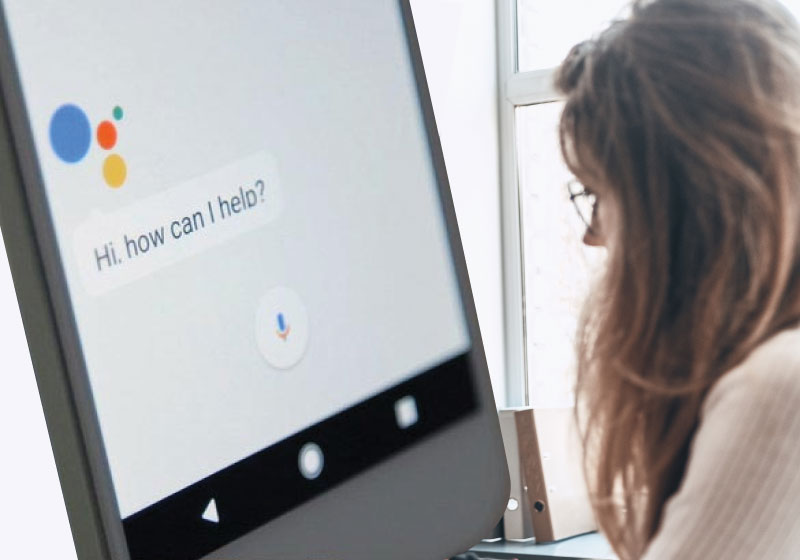
In December 2019, Google rolled out what it calls ‘Google Interpreter Mode’ on modern Android smartphones. In doing so, Google has made some people question the continued relevance of human interpreter services.

Will Google eventually replace v and interpreters as we know them? Thankfully, the answer to this question is a simple no. Here, we’ll look at a few basic reasons why this is the case.

What is Google Interpreter Mode?

Most people are familiar with Google Translate. — This being the easy to use web app that can instantly translate text from 109 different languages. At its most basic, Google Interpreter Mode builds of this functionality, to offer real-time translation of spoken dialogue.

To use Google Interpreter Mode, simply open your Google smartphone assistant and say something like, “Hey Google, be my Hungarian translator.” When you do, Google Interpreter Mode will begin translating what you say into one of 44 supported languages.

How Does Interpreter Mode Compare to Using Human Interpreter Services?

While many professional translators and interpreters will argue otherwise, Google Interpreter Mode is surprisingly good at translating real-time casual conversations.

If you need to buy a bus ticket in Venice or talk sport among non-English speaking friends, you will often find that Google Interpreter Mode translates dialogue flawlessly. Don’t worry, though. Google Interpreter Mode isn’t going to replace real human interpreter services any time soon.

Using Google Can’t Compare with Using Real Human Interpreter Services

If you are a business owner, you might hear about Google Interpreter Mode and immediately see using this as a potential way to save on the cost of hiring a real interpreter. Don’t get too excited just yet, though.

While Google can capably translate casual conversations, Interpreter Mode isn’t suitable for use in professional business contexts. There are several reasons for this.

l  Unlike a human interpreter, Google Interpreter Mode can’t familiarize itself with the context of conversations.

l  When using Google Interpreter Mode, it is important to remember that Google doesn’t know when it makes a mistake. As a result, something could get translated in error and you would never know.

l  Unlike a human interpreter, Google can’t mediate conversations or relate emotion when translating. Whereas a human interpreter may ask you to repeat something or make sure to express your gratitude when saying “Thank You,” Google can only interpret raw dialogue.

It also needs to be remembered that no conversation you have when using Google Interpreter Mode is private. Google is well-known to harvest, analyze, and share, an obscene amount of data from people who use its services. As it stands, this simply isn’t acceptable when conducting confidential business discussions.

Will Google Eventually Replace Human Translators?

No one knows what the future holds. However, for the reasons we have outlined and many others, it is unlikely that Google will ever make human translators obsolete. There are some things that it is not possible to subtract the human touch from, and translation is one of these. 

Check out Languagers Website to see what real-time human interpreters can do for your business.


Wednesday, July 1, 2020

Telephone Interpreting - Everything You Need to Know to Get Started


Telephone interpreting represents the easiest, fastest, and most cost-effective way to hire an interpreter in 2020. That said, you probably know that already. What you might not know, though, is how telephone interpreter services work.

Do you need to discuss important business with somebody who speaks a different language? If so, keep on reading to learn how telephone interpreting works, and how to prepare for calls.


How Does Telephone Interpreting Work?

How telephone interpreting works is simple. To start, you schedule a call with one or more parties, just like you usually would.

Once a call is scheduled, the next step is to reach out to an interpreter. At Languagers, we make this step simple, by making available a short contact form on our website.  We will connect you with a suitable interpreter. The interpreter we assign to you will then join in on your call, the same way anyone might a regular conference call.

You can also call on-demand 24/7 without scheduling.  Once you know what language you need translating and when a call will take place on-demand, you will be connected to a suitable interpreter in seconds. This can also be done the same way as a regular conference call. You can add an interpreter while you are speaking with someone on your phone.

In every case, our team at Languagers will be able to connect you with an interpreter within the time frame. All that needs to be remembered in calls where an interpreter is present, is that communication will flow slightly differently to how it might usually.

What to Expect During Calls When Working with an Interpreter

Usually, when people converse via telephone, conversations overlap and can be somewhat scattered.

During a regular telephone call, you or a party you are talking to might chip in as the other person is talking. It can also be difficult to know when it is the right time to speak.

During calls where an interpreter is present, dialogue between parties is more structured.

In calls between two parties, conversations are interpreted consecutively. One party will, therefore, speak. Afterward, there will then be a brief pause, as interpreters translate what has been said for the benefit of the other caller.

Here’s what else to expect:

l  During calls, a translator might ask you or the other party in a conversation to pause speaking or repeat what you have just said. This will ensure that what you are saying is translated accurately.

l  Interpreters will usually participate in calls using wearable headsets and mics to optimize audio quality. You can too, but doing so is optional.

l  Usually, it will not be possible to interrupt an interpreter as they are speaking. This is because most interpreters use feedback blackout technology that prevents them from hearing their own voices when speaking.

When working with a telephone interpreter during calls where dialogue from several people may need to be translated, the exact format of a call may be different. However, before calls take place, your interpreter or translation agency will brief you on what to expect.


How Should You Prepare for Calls with an Interpreter?

When preparing for a telephone call where an interpreter will be present, it is important to clarify the context of a call with interpreters.

As a rule, you should let your interpreter know who will be participating in a call, what their professional positions are, and what you will be discussing. When possible, it is also advisable to give interpreters copies of any documents that might be discussed.

When preparing for calls, it is also important to make sure that call sound quality will not drop during conversations. This being the case, it is always a good idea to conduct test calls to check the suitability of telephony hardware and connections.


What About Maintaining Client Confidentiality?

In business, details of conversations with clients and business partners must be kept strictly confidential. Thankfully, all Languager telephone interpreters are bound by strict confidentiality agreements. However, this isn’t the same for some other interpreters.

If hiring a freelance interpreter or using a different telephone interpreter service, make sure to ask interpreters to sign non-disclosure agreements. This will ensure that the details of conversations with your clients and associates remain strictly confidential.


ASL VIDEO INTERPRETATION SERVICES: HOW DO THEY HELP PATIENTS WITH HEARING DISABILITIES?

Although American Sign Language (ASL) interpreters play a crucial role for the people and especially for the whole deaf community but the ad...